06 November 2026
Why Small Elderly Care Homes Are Perfect for Movement and ADL Help
Presented by @deanrxmf044
Business Name: Hearthstone South Weber
Address: 6980 S 475 E, South Weber, UT 84405
Phone: (385) 380-3382
Hearthstone South Weber
Our assisted living and memory care community sits in a quiet South Weber neighborhood at the mouth of Weber Canyon, minutes from Ogden Regional Medical Center and close to family across Davis and Weber counties. We offer Assisted Living private studio apartments for seniors who want independence with a helping hand: medications, bathing, dressing, meals, and housekeeping. We also provide Memory Care secure, calm setting with structured routines and 24/7 supervision for residents living with Alzheimer's disease or other dementia. We've cared for residents here since 2019, with attentive caregivers, home-cooked meals, and a calendar full of things to look forward to.
6980 S 475 E, South Weber, UT 84405
Business Hours
When families start to look seriously at senior care, 2 practical concerns typically drive the search:
Can my parent still move safely?
And who will help with the basics of daily life when they cannot?Mobility and activities of daily living (ADLs) are the spine of independent living. When those start to decrease, the difference in between an excellent and bad care environment becomes really obvious, very quick. Over a number of years working with older adults and their families, I have seen small elderly care homes silently outshine larger facilities in precisely these areas.
This is not about chandeliers in the lobby or a full calendar of events. It is about who is actually there at 6:30 a.m. When your mother needs aid to stand, or at midnight when your father with Parkinson's freezes in the corridor, not able to take a step.
Small homes tend to handle those moments much better. Here is why.
What "Small Elderly Care Home" Really Means
The terms can be complicated. Depending upon your state or nation, a small elderly care home may be certified as:
- a small assisted living home
- a residential care home
- a board and care home
- an adult household home
Although the regulations differ, what unifies these designs is scale. Instead of 80 or 120 homeowners, a small home normally supports between 4 and 16 older grownups, typically in a converted single family house or a purpose built small residence.
Daily life feels closer to a home than an organization. You see it in the sounds and rhythms: one kettle boiling, a tv in the living-room, a caregiver chatting with a resident while folding laundry. This physical and social scale ends up being a significant benefit when movement decreases and ADL assistance ends up being more complicated.
Why Movement and ADLs Sit at the Center of Elderly Care
Before checking out why small homes work so well, it helps to be particular about what we are talking about.
Mobility covers a spectrum:
- transferring in and out of bed or a chair
- walking with or without an assistive gadget
- climbing a couple of steps
- getting in and out of a car
- turning and repositioning in bed
ADLs are the bedrock of everyday function:
- Bathing and bathing
- Dressing and grooming
- Toileting and continence
- Eating and drinking
- Basic mobility and transfers
When someone moves into assisted living or another senior care setting, households typically focus on medication management or social activities. 6 months later, what they discuss is whether personnel can securely assist mom into the shower, or if dad has stopped strolling due to the fact that "it is easier for staff to wheel him."
Loss of mobility and ADL self-reliance seldom occurs over night. It erodes through numerous small moments. Possibly the walker is always just out of reach. Maybe personnel are rushed and start doing tasks for the resident rather than with them. Perhaps there is a long walk to the dining-room and nobody to pace it properly.
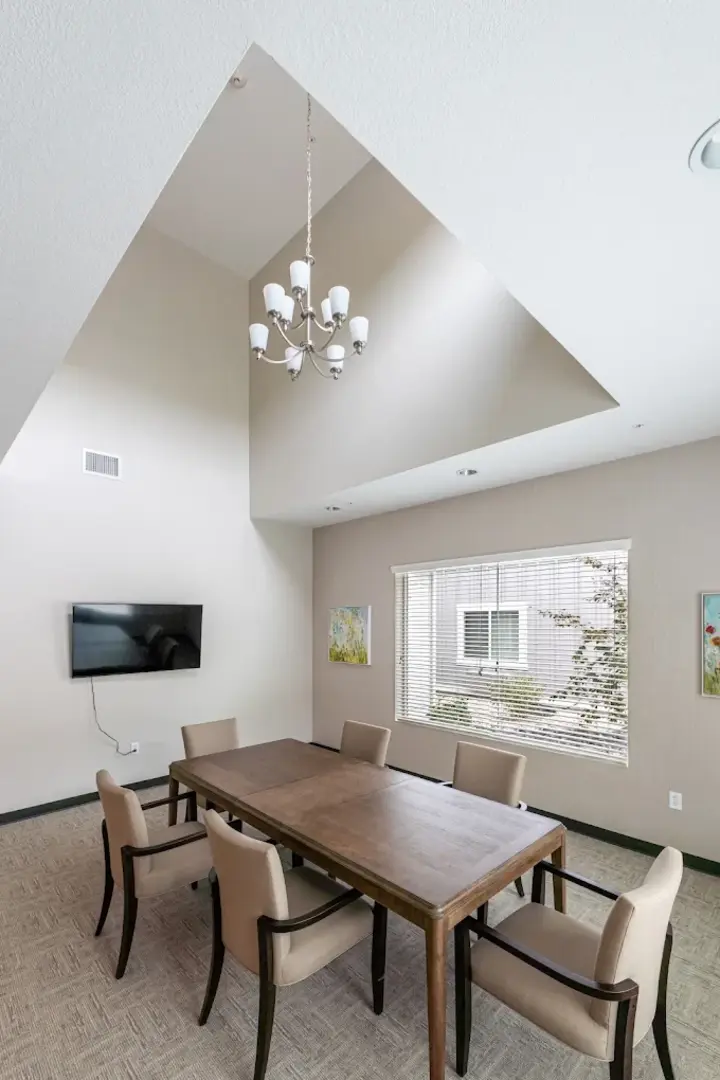
Small elderly care homes are constructed, almost by accident, to manage those micro minutes more attentively.
The Power of Proximity: Layout and Daily Flow
One of the most striking distinctions between a small care home and a larger facility is simple distance. In a conventional assisted living building, I have determined 200 to 300 feet from a resident's space to the dining-room. Include elevators, long corridor stretches, and entrances, which can seem like a marathon for somebody with arthritis or heart failure.
In a small home, almost whatever is within 20 to 40 feet:
- bedrooms clustered near the main living area
- dining table within sight of the kitchen area
- bathrooms near to bed rooms, frequently shared between 2 rooms
For mobility and ADL support, that proximity changes the whole equation.
A caregiver hears the walker scraping on the hardwood and instantly actions in to use a steady arm. The person who needs a toileting tip passes the bathroom a number of times a day as part of the natural household rhythm. If a resident with mild dementia forgets where the dining table is, they can still orient aesthetically from the bedroom door.
The physical layout also makes it simpler to include movement into the day. I frequently motivate caregivers in small homes to utilize "micro strolls" rather than official workout sessions. Rather of scheduling thirty minutes in a physical fitness space, they stroll homeowners to the yard for 5 minutes of fresh air, or do 2 laps around the living area before sitting down for lunch. When whatever is near, these littles movement become realistic, even for frail residents.
Staff Ratios and Genuine Attention
The most consistent advantage I have seen in smaller elderly care homes is staffing. It is not just about the number of people are on task, however where they are physically and what they are accountable for.
In a 60 bed assisted living building at night, you might have two caretakers on a flooring plus a med tech floating between floors. Those caretakers are spread out across long corridors, with locals they may not understand effectively. Addressing a call light can imply strolling the length of the building.
In a 6 or 8 resident home, a single caretaker can hear a resident trying to get up from a recliner chair, or see somebody starting to stand without their walker. That early visual hint allows for preventive support rather of crisis response.
Faster action times make a measurable difference for movement and ADLs:
- fewer falls when someone tries to toilet separately
- less incontinence when staff can react to the very first request, not the 3rd
- less dependence on bed alarms and other intrusive devices
- more self-confidence for residents who understand someone is nearby
Over time, those experiences shape how willing an older adult is to attempt walking to the bathroom or standing to dress. If each attempt is met calm, prompt assistance, they are most likely to keep attempting. If attempts result in slow reactions or embarrassing accidents, many silently stop attempting to move and delay totally to staff. That is when movement collapses.
Familiar Faces and Constant Care
ADL help is intimate. Being bathed, toileted, or dressed by a turning cast of complete strangers is not just uneasy, it is inefficient. People hold back, they are less likely to interact discomfort or lightheadedness, and they in some cases refuse support altogether.
Small elderly care homes typically keep a core group of 4 to 10 caretakers, with fairly little turnover compared to large senior care homes. Locals see the very same people across early mornings, evenings, and weekends. That familiarity has several advantages for mobility and ADL support.
First, caregivers establish an extremely comprehensive sense of each resident's "normal." They understand if Mrs. Patel usually needs an one person assist to stand, and can rapidly find when she suddenly requires more assistance, possibly indicating a new infection or medication side effect. I have seen small home caretakers detect early pneumonia simply since "his transfer just felt different today."
Second, locals are more accepting of help when they know who is offering it. A proud retired teacher may initially refuse bathing help, but over weeks will develop trust with one caregiver and eventually accept assistance with washing her back or feet. That level of cooperation keeps health and skin stability intact, minimizing the risk of pressure injuries or infections.
Finally, consistent caretakers can construct movement assistance into existing routines in a very personal way. They understand who takes pleasure in keeping the kitchen area counter for balance practice while "helping" with meal prep, or who likes to stroll the hallway to look at household pictures every evening.
Mobility Support: More Than Just a Walker
Many households assume that as long as a facility provides a walker or wheelchair, movement needs are covered. In practice, good movement support looks really various, especially in a smaller home.
The strongest small homes deal with movement as a day-to-day treatment opportunity rather than a one time equipment purchase. A resident might begin their stay needing 2 individuals to help them stand. Within weeks, with repeated short practice sessions and self-confidence building, they might progress to an one person stand pivot transfer.
Small homes can make this sort of development because:
- staff are present throughout nearly every transfer and can coach method
- distances are short so strolling attempts feel safe and workable
- there is versatility to change the pace without locking into rigid schedules
In one 10 bed home I worked with, we had a resident with innovative COPD who insisted she "could not walk." In the large assisted living where she had stayed previously, personnel frequently utilized a wheelchair for speed. In the smaller home, caregivers motivated her to walk simply from the recliner chair to the restroom sink, with a chair put halfway in case she required to sit. Within a month she was walking several times a day, happy with each small distance.
Safe movement also depends on clear paths and basic environments. Small homes are much easier to keep uncluttered, and personnel are more likely to observe when a throw rug curls or a cable crosses a corridor. That constant, casual environmental scanning is hard to reproduce in big complexes.
ADL Support as Relationship, Not Task List
On paper, ADL support in assisted living and small homes often looks similar. Both might list help with bathing two times weekly, day-to-day dressing, and toileting as needed. On the floor, nevertheless, the experience can be rather different.
In a bigger senior care setting with many residents per caretaker, ADL support can become very task oriented: "I have 10 homeowners to get up and dressed before breakfast." This pressure motivates speed. Caretakers might lay out clothing, dress the resident quickly, and carry on. It is effective, but it silently deteriorates skills.
In a small elderly care home, the same task might include assisting the resident to choose their clothing, sit at the edge of the bed, and pull on their own shirt with support just for buttons or socks. These differences sound subtle, but they maintain great motor skills, balance, and a sense of autonomy.
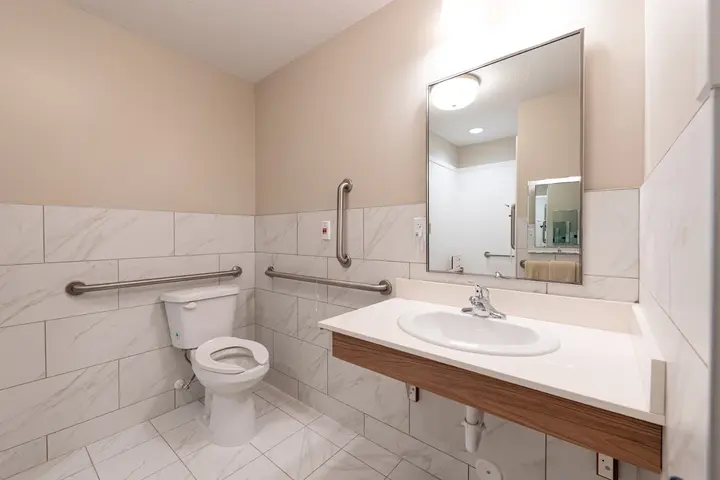
Bathing is another area where the small home model shines. Numerous older adults fear falls in the shower more than almost anything else. In smaller homes, restrooms are often simply a few actions from the bed room, and caregivers can embellish regimens. Some residents choose evening baths when they are less rushed, others do better in the early morning after medications. This versatility is simpler to accomplish when you are coordinating 6 residents instead of 60.
Toileting assistance is also naturally more responsive. Instead of relying heavily on "every two hours" scheduled toileting, caretakers can discover private patterns. If Mr. Gomez always requires the bathroom after breakfast coffee, someone can be all set at that time, minimizing both accidents and unneeded trips that tire him out.
Safety Without Over Restriction
Families often stress that a small elderly care home may be "less safe" than a larger, more medical looking structure. In reality, safety is about systems and routines, not square footage.
Smaller homes have actually some integrated in safety advantages for mobility and ADLs:
- Staff can aesthetically check on homeowners more frequently without it feeling intrusive.
- Moving somebody with a walker across a living room is safer than a long passage trek.
- Residents rarely deal with crowds or crowded areas that increase fall danger.
- Noise levels are lower, which helps homeowners with dementia stay calmer and more cooperative during care.
The flipside of security is over constraint. In some settings, out of fear of falls or liability, staff wind up doing practically whatever for citizens. Walkers remain parked in corners, and wheelchairs become the default.
In well managed small homes, there is more room for well balanced judgment. A caretaker who understands a resident's history can decide when to walk side by side with a gait belt and when to enable a brief, monitored independent walk. They work together with physical and occupational therapists who visit periodically, then rollover those suggestions into everyday routines.
I have seen locals in small homes continue to utilize stairs, with rails and support, long after they would have been disallowed from stairwells in bigger senior living structures. That preserved ability matters for quality of life and for blood circulation, strength, and balance.
How Small Homes Support Cognition Along With Mobility
Mobility and ADLs do not reside in a vacuum. Cognitive status affects both. Numerous small elderly care homes serve residents with moderate to moderate dementia, and some specialize in memory care.
For an individual with dementia, intricate structures can be disabling. Long, identical hallways trigger confusion. Elevators are hard to navigate. Citizens get lost trying to find the dining room or their own space, which causes disappointment and, frequently, decreased movement.
A small home's easy layout supports cognition and mobility together. A resident can typically see the cooking area, living space, and often the garden from a central spot. They learn the space quickly and can move more confidently within it. Less individuals also suggests fewer faces to track, which decreases agitation.
During ADL jobs, familiar caretakers can use customized cues. They understand that Mr. Chen responds much better if you play his favorite 1960s playlist during bathing, or that Mrs. Andrews needs a step by step spoken prompt while she brushes her teeth. These small cognitive supports make the physical job safer and less distressing.
Because small homes work more like families, residents with dementia often participate in light tasks within their capability: folding towels, setting napkins on the table, watering plants. These activities offer natural movement that feels purposeful instead of therapeutic.
Respite Care in Small Houses: A Test Drive for Families
Many households first come across small elderly care homes through respite care. A parent may require a week or a month of assistance after a hospitalization, or while the main household caregiver takes a break.
Respite remains in a small home can be especially effective for comprehending how movement and ADL needs are handled. With just a handful of residents, staff rapidly be familiar with the short-lived visitor and can adjust routines within days. I have seen respite homeowners arrive needing substantial support, then leave strolling more steadily and accepting help more calmly since the environment decreased their stress.
Respite care likewise gives households a possibility to observe:
- how frequently personnel walk with locals instead of defaulting to wheelchairs
- how toileting and bathing are scheduled (or flexibly managed)
- whether citizens appear hurried during morning and evening routines
- how caretakers deal with resistance or worry during ADL tasks
For adult kids who are not sure about moving a parent into long term senior care, a positive respite experience in a small home can be an eye opener. It shows what really customized movement and ADL assistance appears like, as opposed to what is frequently assured in shiny brochures.
Trade Offs and Limitations of Small Elderly Care Homes
No care design is ideal. While I see clear benefits of small homes for mobility and ADLs, there are truthful trade offs to consider.
Medical intricacy is one. Some small homes handle homeowners with fairly innovative medical requirements, including feeding tubes or complex wound care, however numerous do not. A really medically delicate individual may still be much better served in a skilled nursing facility or a bigger assisted living with strong on site nursing.
Staffing variability is another threat. The very best small homes have steady, well qualified caretakers and strong oversight. The worst are essentially boarding houses with minimal guidance. Since the setting is smaller, one weak supervisor or inexperienced caretaker can have an outsized impact.
Amenities are also modest. If somebody loves the concept of a gym, swimming pool, and several dining locations, a larger senior care community might be more attractive, though those functions typically matter less to people with significant movement and ADL needs.
Finally, expense structures vary. In some regions, small residential care homes are less expensive than large assisted living facilities; in others, they are similar or even higher, particularly if they offer high staffing ratios and extensive hands on assistance.
The secret is to evaluate the particular home, not the classification, and to concentrate on what matters most for the resident's daily functioning.
What to Look For When You Tour a Small Elderly Care Home
When households tour, they are frequently distracted by design or the charm of a yard garden. Those things are pleasant, but the real evaluation for movement and ADL support takes place in quieter details.
Consider this short list as you walk through:
- Do you see caregivers strolling alongside residents, or primarily pushing wheelchairs?
- Are restrooms and bed rooms close together, with grab bars and non slip floor covering?
- Does staff discuss citizens in specific terms, or just in generalities?
- Are homeowners clean, appropriately dressed, and using correct shoes?
- When you ask how they manage a fall or a new decline in mobility, do you get a clear, useful answer?
Spend a bit of time simply being in the common location. You can learn a lot by viewing how rapidly staff notice a resident starting to stand, or how they react when somebody looks confused about where to go. Listen for your own internal reactions: Does this location feel hurried or relax? Does the personnel appear to understand who is in the structure at any given time?
If possible, visit at various times of day. Morning and evening are when the bulk of ADL care happens, and those are also the times when understaffing, if present, becomes extremely visible.
Helping a Parent Transition: Preserving Mobility from Day One
Moving into any kind of elderly care can inadvertently accelerate loss of function if not dealt with carefully. Households can play a vital function, especially in the very first month.
Share specific information with the home about your parent's baseline. Not just "needs help with bathing," but "walks 20 feet with a walker and someone steadying the belt" or "can pull t-shirt over head but requires aid with buttons." Those details assist caregivers prevent undervaluing or overestimating abilities.
Encourage the home to continue existing regimens that support motion. If your father has actually constantly taken a short walk after lunch, ask staff to join him for a brief walk at that time. If your mother prefers sponge baths due to fear of showers, explain this clearly so she does not simply decline bathing and get labeled "resistant."
Be present where you can throughout the first few days, not to monitor personnel, however to supply connection. Your existence typically assures the older adult enough that they will attempt walking or self care in the brand-new setting rather of withdrawing entirely. Gradually, as trust in the caregivers grows, you can step back.
Most importantly, reinforce the concept that small successes matter. If you hear that your parent strolled to the table independently or washed their own Hearthstone South Weber memory care south weber ut face at the sink, emphasize that progress when you visit. Older adults, like anyone else, react strongly to genuine acknowledgment.
Why Small Residences Often Age Better With the Resident
One of the peaceful virtues of small elderly care homes is how well they adapt as needs change. A resident might enter for short term respite care after a fall, stay for several months of assisted living level assistance, then continue living there through advanced decline.
Because the scale is intimate, shifts typically feel smoother. When somebody who utilized to stroll separately now needs a walker, there is no need to move to another wing. When ADL needs grow from cueing to hands on help, the same core caretakers simply change their technique and time allocation.
For families, this connection indicates less disruptive moves. For the resident, it suggests they can deal with increasing reliance on familiar ground, surrounded by individuals who understand their history, humor, and choices. That psychological stability supports cooperation with care, which straight enhances the quality of mobility and ADL assistance.
In completion, the case for small elderly care homes in the context of movement and ADLs is not abstract. It appears in extremely common, really human moments: a safe transfer instead of a fall, an unwinded shower rather of a stressed battle, a brief walk in the garden rather of another day in bed.
For numerous older adults, particularly those who value familiarity, individual attention, and preserved function over resort design features, that quieter, smaller setting ends up being precisely the right size.
Hearthstone South Weber provides assisted living care
Hearthstone South Weber provides memory care services
Hearthstone South Weber provides respite care services
Hearthstone South Weber supports assistance with bathing and grooming
Hearthstone South Weber offers private bedrooms with private bathrooms
Hearthstone South Weber provides medication monitoring and documentation
Hearthstone South Weber serves dietitian-approved meals
Hearthstone South Weber provides housekeeping services
Hearthstone South Weber provides laundry services
Hearthstone South Weber offers community dining and social engagement activities
Hearthstone South Weber features life enrichment activities
Hearthstone South Weber supports personal care assistance during meals and daily routines
Hearthstone South Weber promotes frequent physical and mental exercise opportunities
Hearthstone South Weber provides a home-like residential environment
Hearthstone South Weber creates customized care plans as residents’ needs change
Hearthstone South Weber assesses individual resident care needs
Hearthstone South Weber accepts private pay and long-term care insurance
Hearthstone South Weber assists qualified veterans with Aid and Attendance benefits
Hearthstone South Weber encourages meaningful resident-to-staff relationships
Hearthstone South Weber delivers compassionate, attentive senior care focused on dignity and comfort
Hearthstone South Weber has a phone number of (385) 380-3382
Hearthstone South Weber has an address of 6980 S 475 E, South Weber, UT 84405
Hearthstone South Weber has a website https://hearthstonesouthweber.com/
Hearthstone South Weber has Google Maps listing https://maps.app.goo.gl/VWbP6MrpzTRbZkoG7
Hearthstone South Weber has an Facebook https://www.facebook.com/hearthstone.south.weber
Hearthstone South Weber won Top Assisted Living Homes 2025
Hearthstone South Weber earned Best Customer Service Award 2024
Hearthstone South Weber placed 1st for Senior Living Communities 2025
People Also Ask about Hearthstone South Weber
What assisted living care and senior care services does Hearthstone South Weber provide?
Hearthstone South Weber provides assisted living care designed to support individual resident care needs through personal care assistance, daily living support, life enrichment activities, and compassionate attentive senior care focused on dignity and comfort in a welcoming home-like residential environment
Does Hearthstone South Weber offer memory care services for seniors?
Hearthstone South Weber emphasizes compassionate senior care that supports residents with varying cognitive and personal care needs, with individualized assistance, meaningful life enrichment activities, and a comfortable home-like residential environment. Families should contact the community to confirm the availability of specialized memory care services
What respite care services are available at Hearthstone South Weber?
Hearthstone South Weber can help families explore respite care services that provide temporary senior care, personal care assistance, daily living support, and opportunities for life enrichment activities while prioritizing individual resident care needs, dignity, comfort, and peace of mind. Availability should be confirmed directly with the community
How does Hearthstone South Weber support daily living and life enrichment activities for seniors?
Hearthstone South Weber focuses on personal care assistance, individualized daily living support, and life enrichment activities that encourage social engagement, independence, and meaningful connections while providing compassionate attentive senior care in a comfortable home-like residential environment
Why do families choose Hearthstone South Weber for assisted living care and senior care?
Families considering Hearthstone South Weber can look for assisted living care that emphasizes individual resident care needs, personal care assistance, meaningful life enrichment activities, and compassionate attentive senior care focused on dignity and comfort, along with a welcoming home-like residential environment and opportunities to discuss memory care services and respite care services based on their loved one's needs
Where is Hearthstone South Weber located?
Hearthstone South Weber is conveniently located at 6980 S 475 E, South Weber, UT 84405. You can easily find directions on Google Maps or call at (385) 380-3382 Monday through Sunday Open 24 hours
How can I contact Hearthstone South Weber?
You can contact Hearthstone South Weber by phone at: (385) 380-3382, visit their website at https://hearthstonesouthweber.com/ or connect on social media via Facebook
Residents may take a trip to the Burly Burger. Burly Burger offers a casual dining experience where families visiting loved ones receiving assisted living, memory care, senior care, elderly care, and respite care can gather for a delicious meal together.